Escape the Ordinary in East Gippsland
There’s no denying that East Gippsland is home to more than a few incredible landmarks and things to do. From Lakes Entrance to the Snowy River, tourists eagerly lock in their annual holidays here for oh so many reasons. From relaxation to adrenaline activities, escaping the ordinary in East Gippsland is easier than you might think.
This article is about a selection of unique East Gippsland attractions that fly under the radar and are very worthy of a visit.
They’re a little bit quirky. A tad obscure. They’re for the people who’d rather spend an afternoon tracking down the location of a giant tree root than soaking up the sun on the beach.
Every attraction on this list is the ideal detour for people who like to get off the beaten track to see something unusual.
So, whether you’ve been here more times than you can count, or this is only your first visit, here’s your chance to escape the ordinary in East Gippsland and see something you’ll never forget!
Visit the Big Root in Nowa Nowa
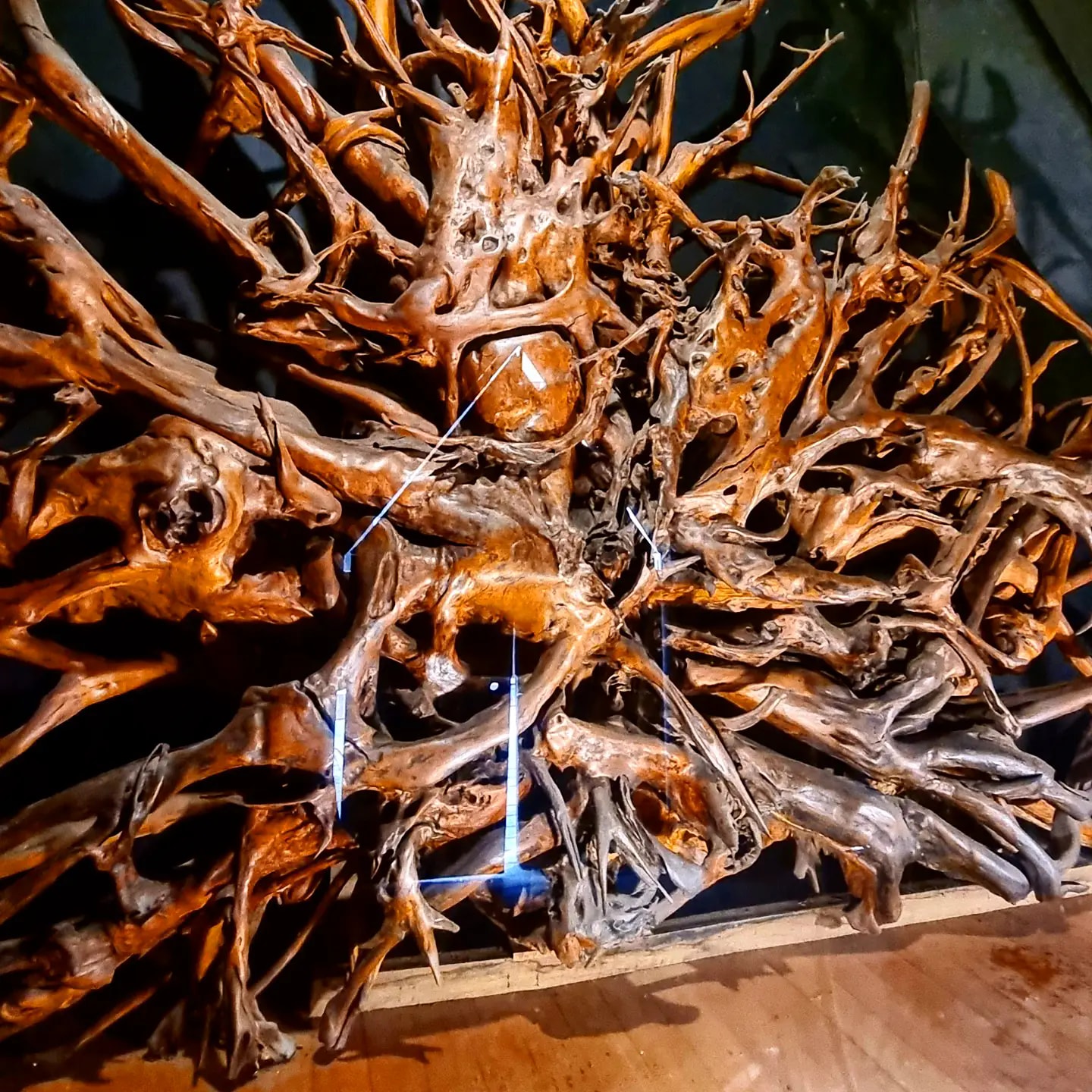
I’m willing to bet you’ve never plugged ‘tree root’ into Google Maps. But when it comes to the Nowa Nowa Big Root you absolutely won’t regret it.
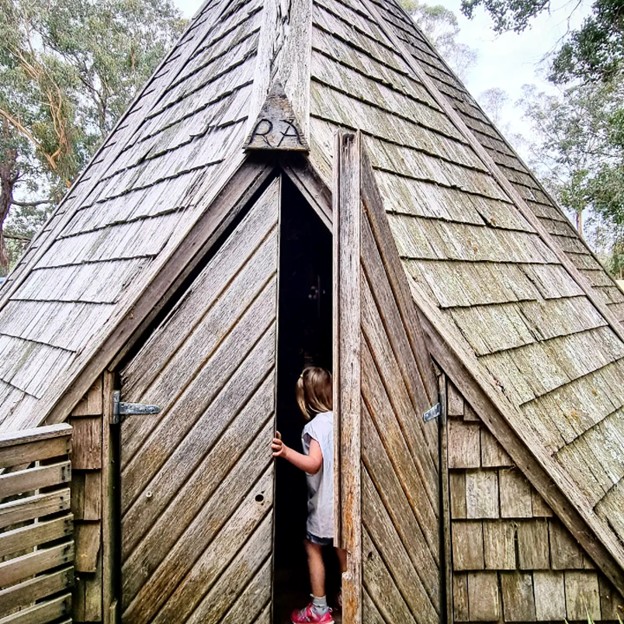
Located just over 15 minutes from Lakes Entrance, the 7m x 4m Big Root is housed in a custom-built wooden pyramid at Mingling Waters Caravan Park.
So, what exactly is it?
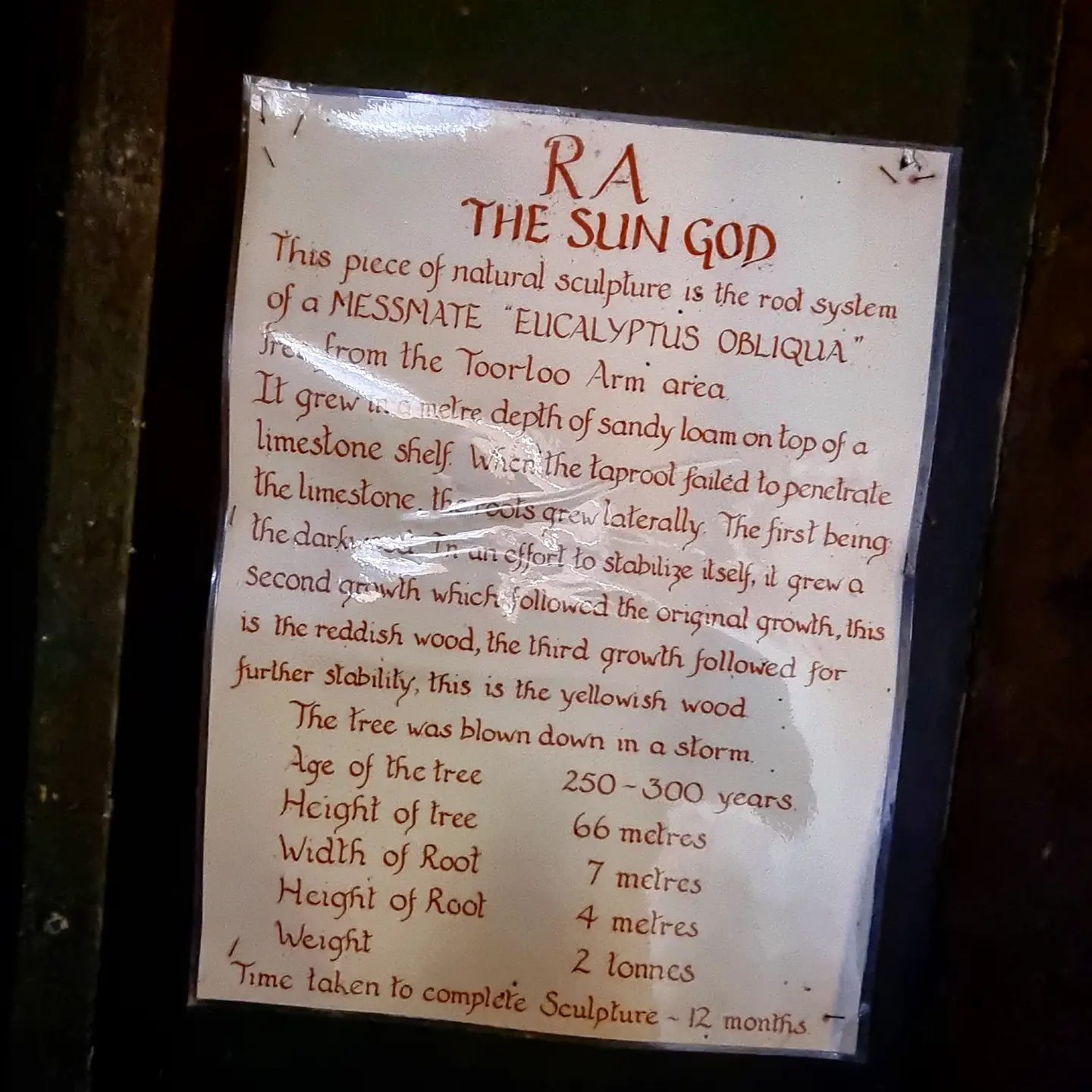
The Big Root is technically a sculpture now. It started life as a large Messmate Eucalyptus Tree in Toorloo Arm. Over 250-300 years it grew to a height of 66m before eventually falling down during a storm.
Its highly unusual root system is the result of its location atop a limestone shelf. The layer of rock prevented the root from penetrating vertically and forced it to spread laterally in multiple directions.
The root was salvaged by local sawmill owner Jack Ramsdell who polished and displayed it in what is now known as the Ramsdell Gallery. It’s also referred to as ‘Ra’ in reference to the Egyptian Sun God. Make sure to ask about that when you arrive!
Spot the Giant Clownfish on the Princes Highway in Kalimna
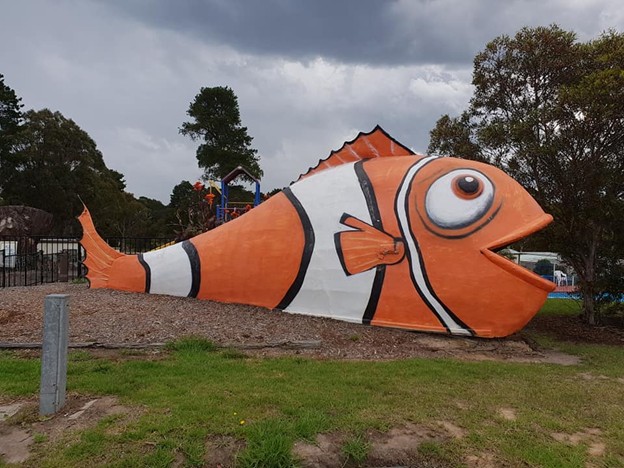
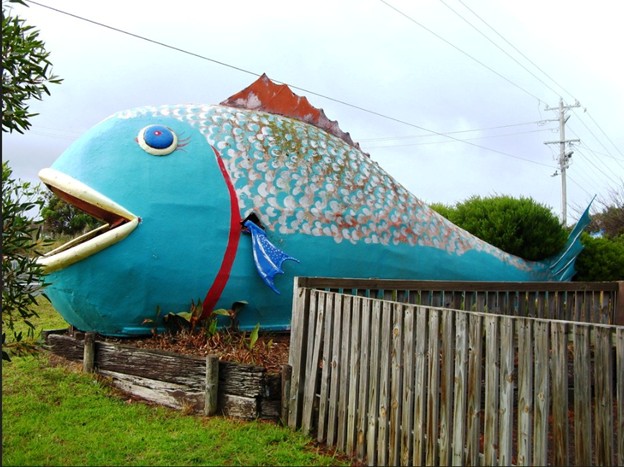
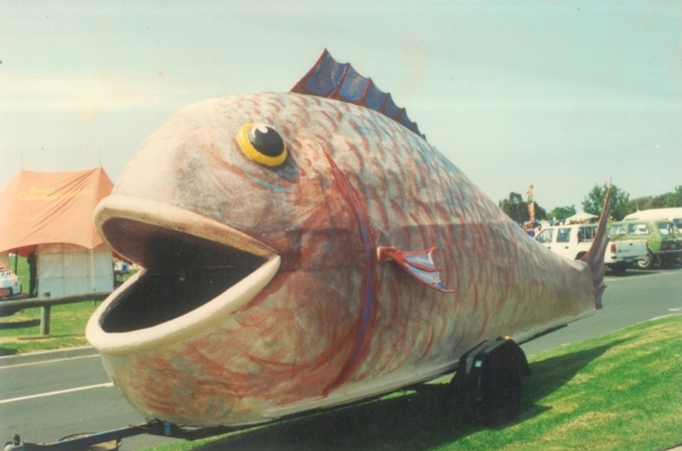
It’d be easy to assume that the giant orange clownfish in front of Lakes Caravilla Caravan Park in Kalimna is just another ordinary run-of-the-mill Aussie Big Thing. But there’s so much more to this story.
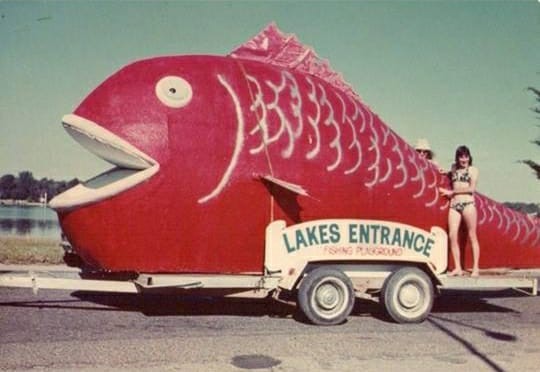
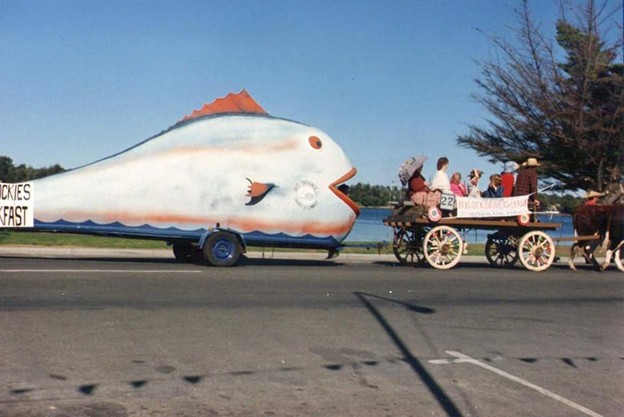
This big ‘ol fish was built in 1975 by George Holding and his sons in the driveway of their family home in Lakes Entrance. It wasn’t always a clownfish either. Originally it was simply called ‘The Big Fish’.
The happy-go-lucky Big Fish made its debut at the 1975 local Kinkuna Festival. Then, in 1976, it was the star of the Lakes Entrance float at the Moomba Parade in Melbourne.
Throughout the 70s and 80s the fish was painted in a variety of new colour schemes. It returned to the Kinkuna Festival, among others, many times.
In 1987, the then-owner of Lakes Caravilla Caravan Park in Kalimna made arrangements to have the fish permanently installed on the Princes Highway in front of their park.
Most recently in 2015, the Big Fish became ‘the Big Clownfish’ with a fresh bright orange coat of paint!
Scroll through the gallery to see how the Big Fish has changed over time.
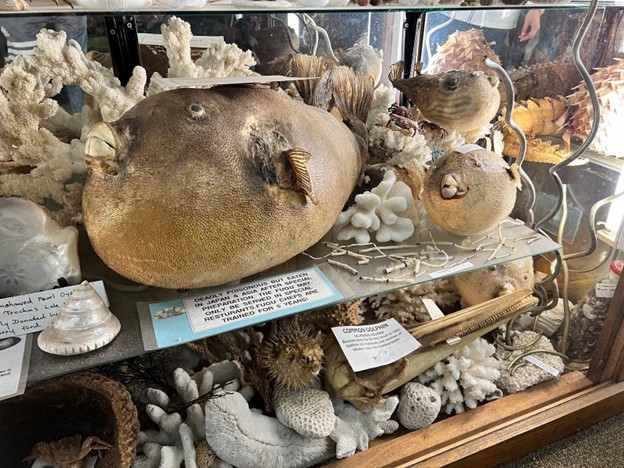
Find the Shark with Two Heads at the Griffiths Sea Shell Museum
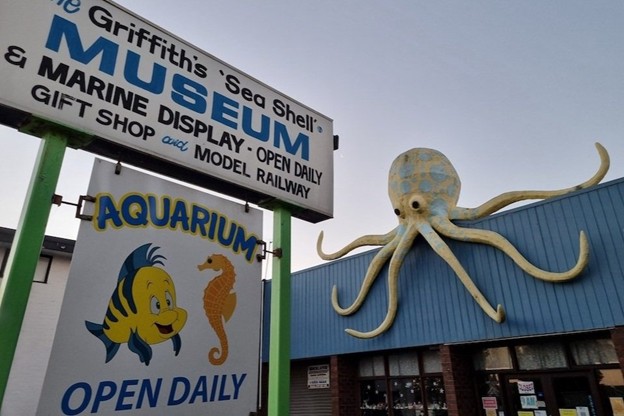
You’d be hard pressed to find a more comprehensive collection of underwater curiosities than the collection housed under the giant octopus atop the Griffiths Sea Shell Museum on the Lakes Entrance esplanade.
With over 90,000 seashells on display, the museum, marine display, and aquarium, is one of the largest private collections in Australia. It has been open to the public since 1962. Almost every item on display is extraordinary or unusual (often both!).
While the shells are as stunning as they are varied, what really delights here are the specimen jars. From stunningly menacing Pineapple Fish to Deep Sea Viperfish, there are sea creatures here that have been recovered and donated by fishers all over Australia.
Give yourself plenty of time for this one – you might find your visit is longer than anticipated!
Catch a Performance on the Floating Shed in Paynesville
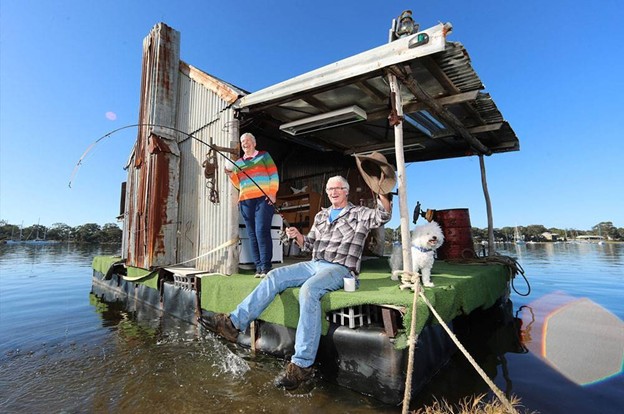
Built by Paynesville local Bernie Ryan, the Floating Shed has to be seen to be believed. Reminiscent of a corrugated iron stockman’s hut, it’s mostly used as a floating not-for-profit music venue.
Depending on the event you might find it bedazzled in fairy lights, throwing colours across the water during an evening show, or crowded with local musicians keeping their audience entertained for hours.
Its irregularity is part of the charm. Some performances are planned and advertised months in advance, while others pop up seemingly at a moment’s notice!
If you’re keen to experience this feat of creativity and community spirit yourself, this exceptionally unique motorized shed is most often seen floating around the waterways surrounding Newlands Arm, Paynesville, and Raymond Island.
See Bullumwaal’s 1897 Stage Curtain
Before I explain what a stage curtain is, allow me a moment to set the scene.
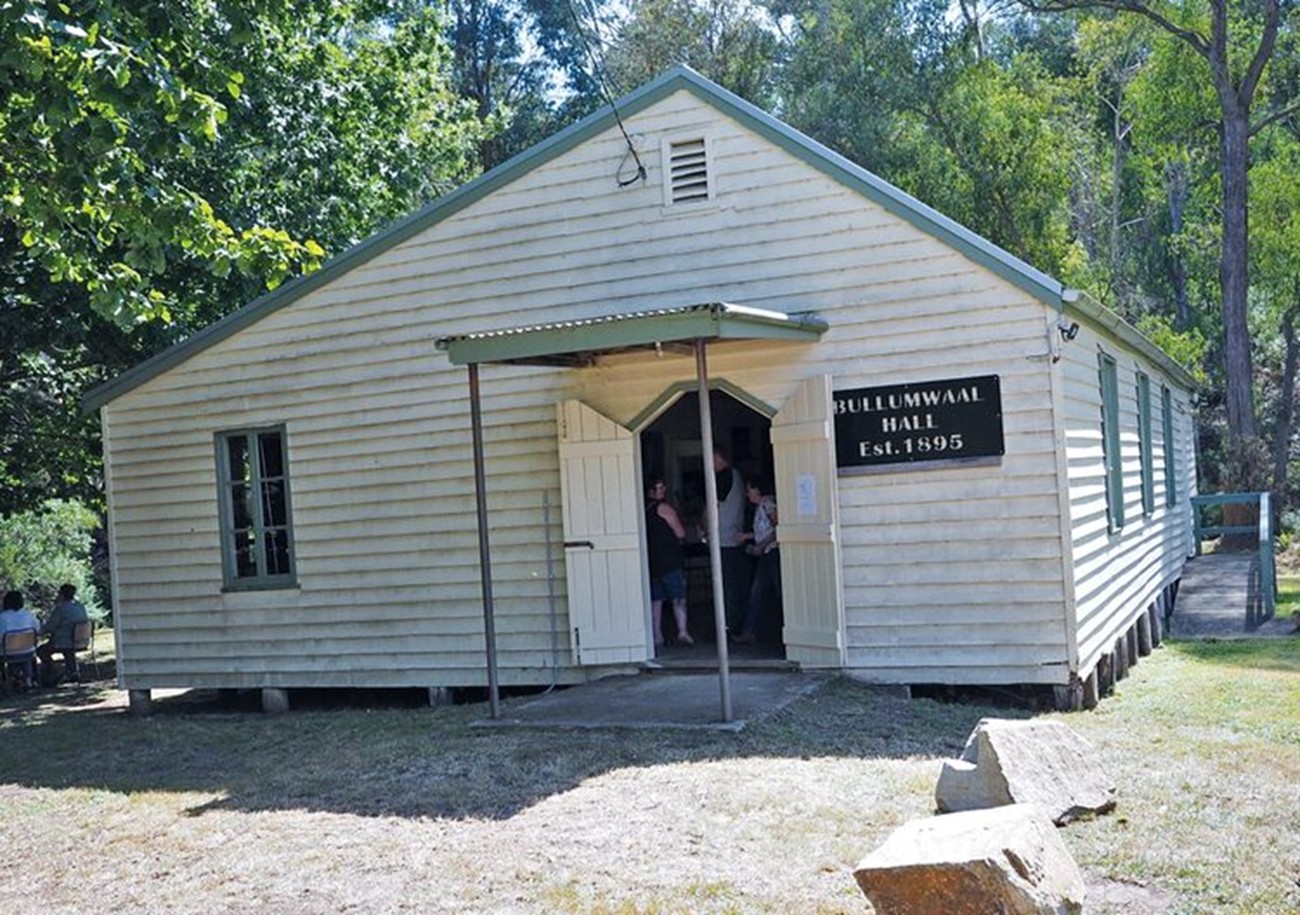
Bullumwaal sits along Boggy Creek, about 29km north of Bairnsdale. In 1857, when gold was found, more than 1000 people moved into the township. The fields proved less profitable than hoped, and by 1870 most mining families moved away.
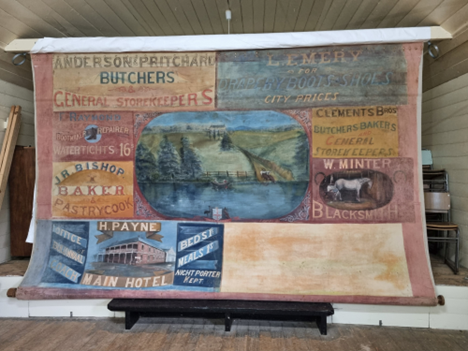
By 1896 the town again swelled to over 700 residents. Many businesses supported the growing population, including a post office, school, telephone service, church, grocer, and mechanics hall. The mechanic’s hall was often decorated with painted “curtains” showing landscapes or artworks, and local businesses could display curtains advertising their services.
Each backdrop, drape, or curtain was made of natural fibre, commonly hessian, and changed with the seasons or to showcase new artistic techniques.
This is where the Bullumwaal Curtain comes in. It’s unique among painted curtains because it combines a central landscape with a range of advertisements. Look closely and you’ll see one for the Main Hotel in Bairnsdale, still operating today.
Remarkably, it is also the only painted curtain remaining in Victoria.
Thanks to the tireless efforts of the Bullumwaal Hall Committee of Management, this surviving curtain from 1897 has been carefully preserved for future generations.
Opportunities to view the Bullumwaal Stage Curtain occur only once every two years at the Miners & Prospectors Gold Exhibition – another cultural experience well worth visiting.
Hopefully the ideas above will help you to escape the ordinary in East Gippsland. Enjoy!