
Freudenfreude is a German term meaning joy derived from another person’s happiness. It describes the pleasure felt when witnessing someone else succeed or experience joy.
The Freudenfreude, Love Is an Act of Resistance exhibition explores how social interaction, media cycles, and identity politics draw people into self-reinforcing narratives that narrow empathy and amplify fear. Online echo chambers intensify division and outrage.
By contrast, love requires effort: listening deeply, remaining open, resisting simplification, and recognising complexity in one another. Love is an act of resistance because it runs counter to systems that profit from fear, division, and dehumanisation. Choosing love means rejecting reductive narratives and refusing to turn difference into enmity. As algorithm-driven polarisation defines our time, love becomes a deliberate and defiant practice of empathy, solidarity, and shared humanity. Slower and more demanding than outrage, love challenges ego, certainty, and control.
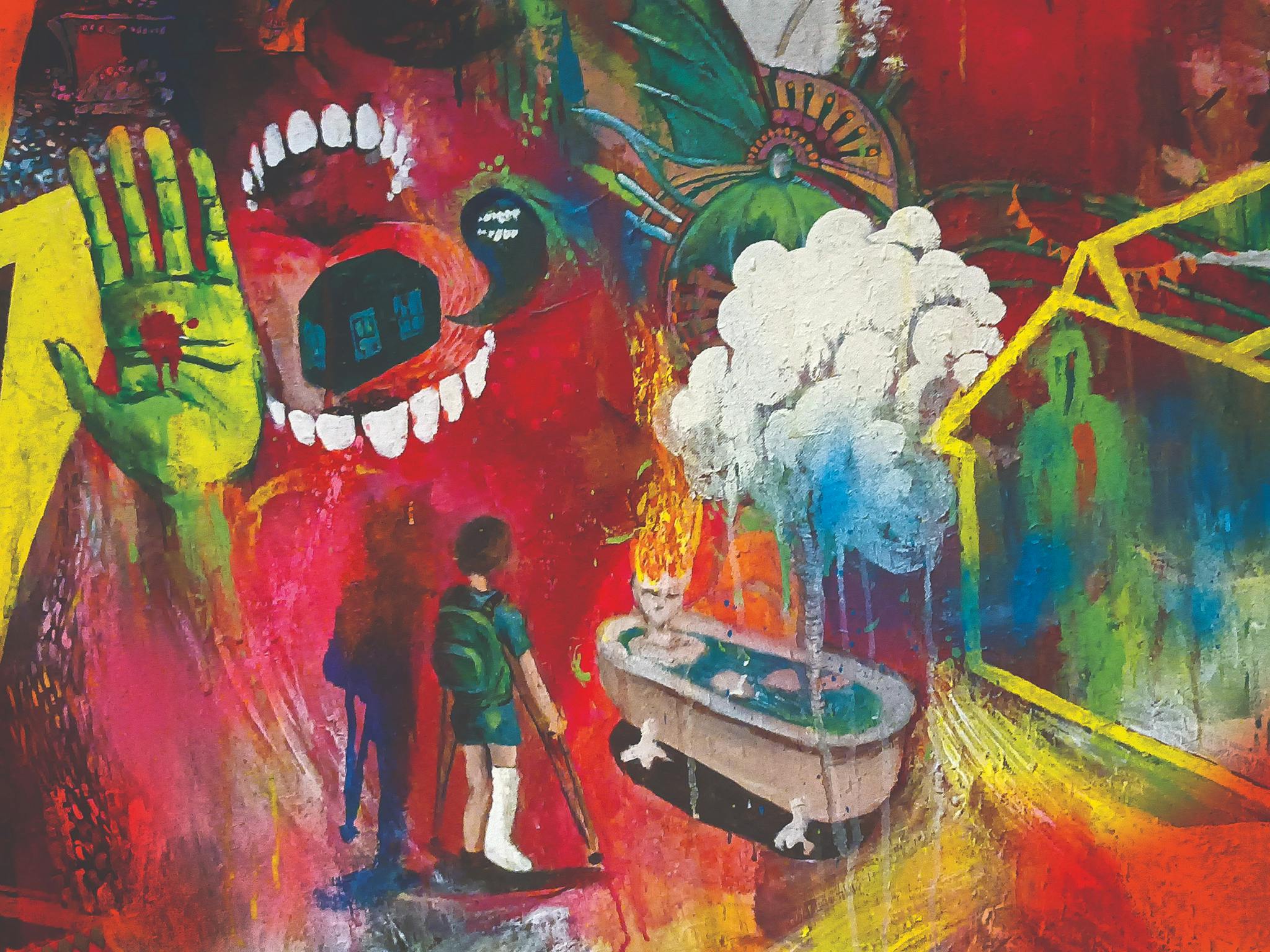
The paintings in Freudenfreude, Love Is an Act of Resistance are created using accumulated symbolic detritus—collage, thread, figurines, text, tape, organic matter, maps, blood, photographs, and other materials with emotional charge. Traditional techniques of acrylic, drawing on canvas, and paper are combined with non-painterly elements to heighten the intangible telemetry between viewer and works.
See the god in everyone.
Image: Loquii. I’m going to do a new thing. Acrylic on canvas